Money is a 'Contract' we forgot we signed
Table of contents
- Table of contents
- The Original Problem: Humans Are Complicated
- Money as a Social API
- The Coin Was Never Just a Coin
- Paper Money: The Contract Gets Weirder
- A Paycheck Is a Contract Made Liquid
- Humans Love Contracts Because the Future Is Annoying
- The Contract We Inherit
- The Paradox of Freedom
- The Internet of Value
- Money Is a Shared Fiction, but Not a Fake One
- The Contract That Owns Us Back
Money as humanity’s oldest API for trust
Somewhere in the middle of human history, someone looked at a shiny piece of metal, a shell, a grain receipt, or probably something equally unconvincing, and said:
“This means value.”
And somehow, everyone else went:
“Yeah, fair enough.”
Which, if you think about it for more than five seconds, is insane.
Because money is one of those things that feels extremely real when you don’t have enough of it, and suspiciously imaginary when you try to explain why it works. A ₹500 note is just paper. A bank balance is just a number in a database. A paycheck is just an entry saying someone somewhere agrees that your work has now been converted into purchasing power.
Nothing about it should work.
And yet, it does.
Every day, billions of humans wake up and participate in this grand, invisible agreement. We work for money. We sell things for money. We measure success, anxiety, freedom, status, survival, and sometimes even self-worth through money.
But money is not value itself.
Money is a contract that value will be recognized.
And maybe that is the real paradox of money: it looks like a thing we own, but it only works because everyone else agrees to honor it.
The Original Problem: Humans Are Complicated
Before money, humans still had value. They had food, land, tools, animals, skills, time, affection, violence, loyalty, and debt.
Especially debt.
Not necessarily debt in the modern “your credit card bill has arrived and it is judging you” sense, but debt as in obligation.
You helped me with the harvest.
I owe you grain.
Your family protected mine.
We owe your family loyalty.
The village remembers who contributed.
The temple records who owes what.
The king wants tribute, because of course he does.
Early society did not run only on barter. The popular story says one person had fish, another had shoes, and they struggled until someone invented money. It is a neat story. It is also a bit too neat, which is usually how you know humans have simplified something beyond recognition.
Anthropologist David Graeber spent years looking for historical evidence of barter-first economies and found almost none. In Debt: The First 5,000 Years (2011), he argued that most pre-monetary societies ran on credit, obligation, and social memory — not swap meets. The barter myth was largely invented by economists who needed a tidy origin story.
A lot of early exchange was probably based on memory, relationships, reputation, and obligation. You did not need a universal currency if everyone knew everyone else, and if social pressure could do the job.
But then humans committed the terrible mistake of scaling.
Villages became towns. Towns became cities. Strangers started interacting with strangers. Trade moved across distance. Empires wanted taxes. Armies wanted salaries. Temples and states needed records. Memory became insufficient.
At some point, “I owe you” needed to become portable.
That is where money enters the story.
Money took personal obligation and turned it into a standardized claim.
Instead of:
“Raj owes Priya two goats and a morally uncomfortable favor.”
You could have:
“Whoever holds this token can claim value from the community.”
Much cleaner. Fewer goats. Slightly fewer awkward conversations.
Money as a Social API
The more I think about money, the more it feels like an API.
An API is basically a contract between systems. It says:
Send a request in this format.
Follow these rules.
Authenticate yourself.
And if everything goes well, you will get a predictable response.
The beauty of an API is that two systems do not need to understand each other completely. They only need to agree on the interface.
Money does the same thing for humans.
When I buy a cup of coffee, the person selling it does not need to know my family history, moral character, childhood trauma, GitHub contribution graph, or whether I am secretly bad at replying to emails.
They only need to know one thing:
Will this payment settle the transaction?
That is it.
Money abstracts away trust.
Not completely, of course. Trust never disappears. It just moves somewhere else.
Instead of trusting me personally, the seller trusts the currency, the bank, the card network, the payment app, the legal system, the state, and a bunch of infrastructure that neither of us fully understands but both of us casually depend on.
Which is exactly how APIs work.
You call an endpoint. Something happens. You hope nobody changed the schema without telling you.
Money is humanity’s oldest large-scale API for value exchange.
And like all APIs, it depends on standards.
| Money | Tech equivalent |
|---|---|
| A currency | A protocol |
| A coin | A token |
| A banknote | A signed message |
| A paycheck | A scheduled response |
| A bank account | Persistent state |
| A failed payment | An error code |
| Inflation | A breaking change in production |
And society, bravely and foolishly, keeps making calls to this API every second.
The Coin Was Never Just a Coin
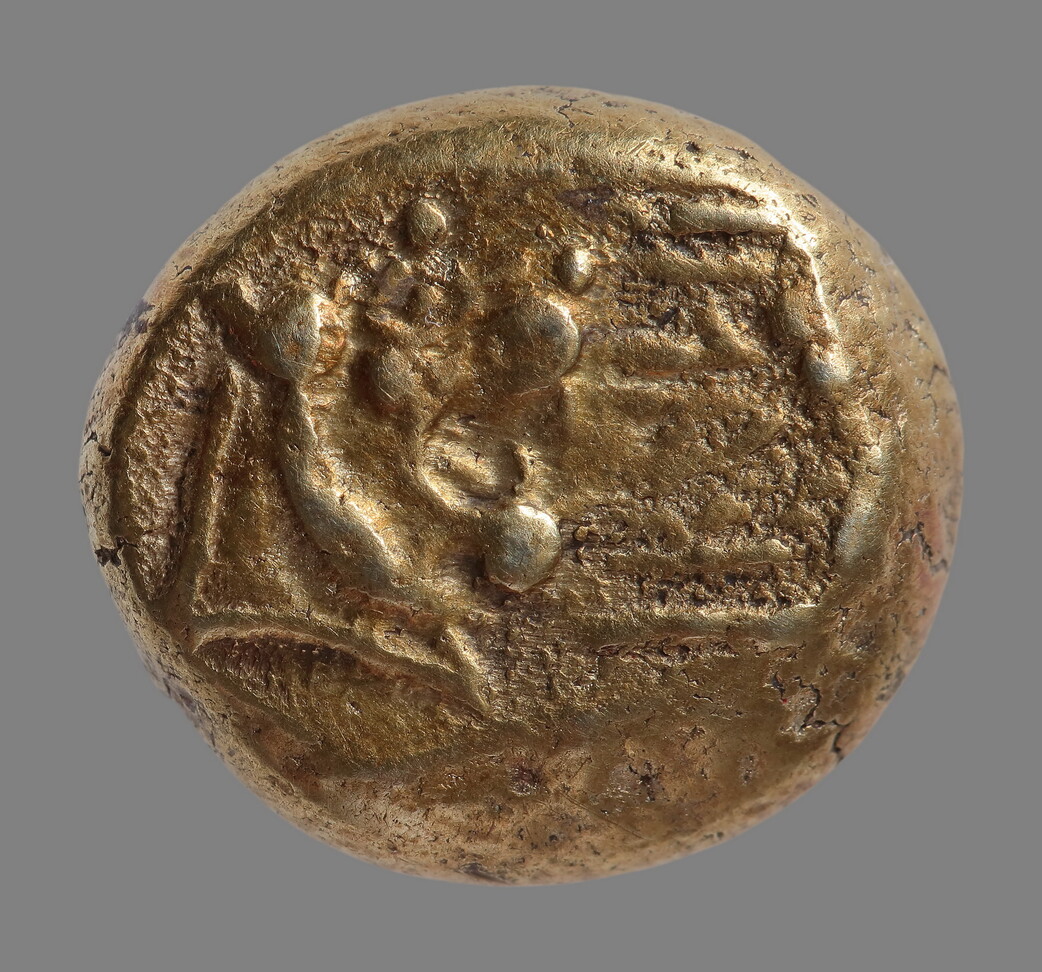 Ancient Lydian electrum coins, c. 600 BC. Among the earliest standardized currency ever minted. (Wikimedia Commons, public domain)
A coin looks simple. That is the trick.
It is a small piece of metal with a stamp on it. But the stamp is doing a lot of work.
The stamp says:
This has an accepted weight.
This has an accepted purity.
This authority stands behind it.
You do not need to test it every time.
You can pass it on.
The coin is not just metal. It is metal plus trust.
Actually, it is metal plus trust plus branding plus enforcement plus network effects.
Which is a lot of responsibility for something that can fall out of your pocket.
Coinage made value easier to move between strangers. It reduced friction. It made trade faster. But it also made taxation, war, salaries, and empire easier. States did not just adopt money because markets needed it. States adopted money because states also needed it.
A soldier could be paid in coin.
A farmer could be taxed in coin.
A merchant could price goods in coin.
A ruler could put his face on coin, because apparently even ancient leaders understood personal branding.
Money was never politically neutral. It was a contract, yes, but not always an equal one.
That is another paradox.
Money allows free exchange, but it often depends on power.
Paper Money: The Contract Gets Weirder
Metal at least had the decency to look valuable.
Gold shines. Silver shines. Copper does its best.
But paper money is where the whole thing becomes beautifully absurd.
China got there first. The Song dynasty introduced jiaozi — printed paper certificates redeemable for coin — around 960 AD. Europe would not catch up for another 700 years. The Chinese also discovered what happens when you print too much of it: inflation, public distrust, and the gradual collapse of the whole system. Same contract, same failure mode, rediscovered independently, centuries apart.
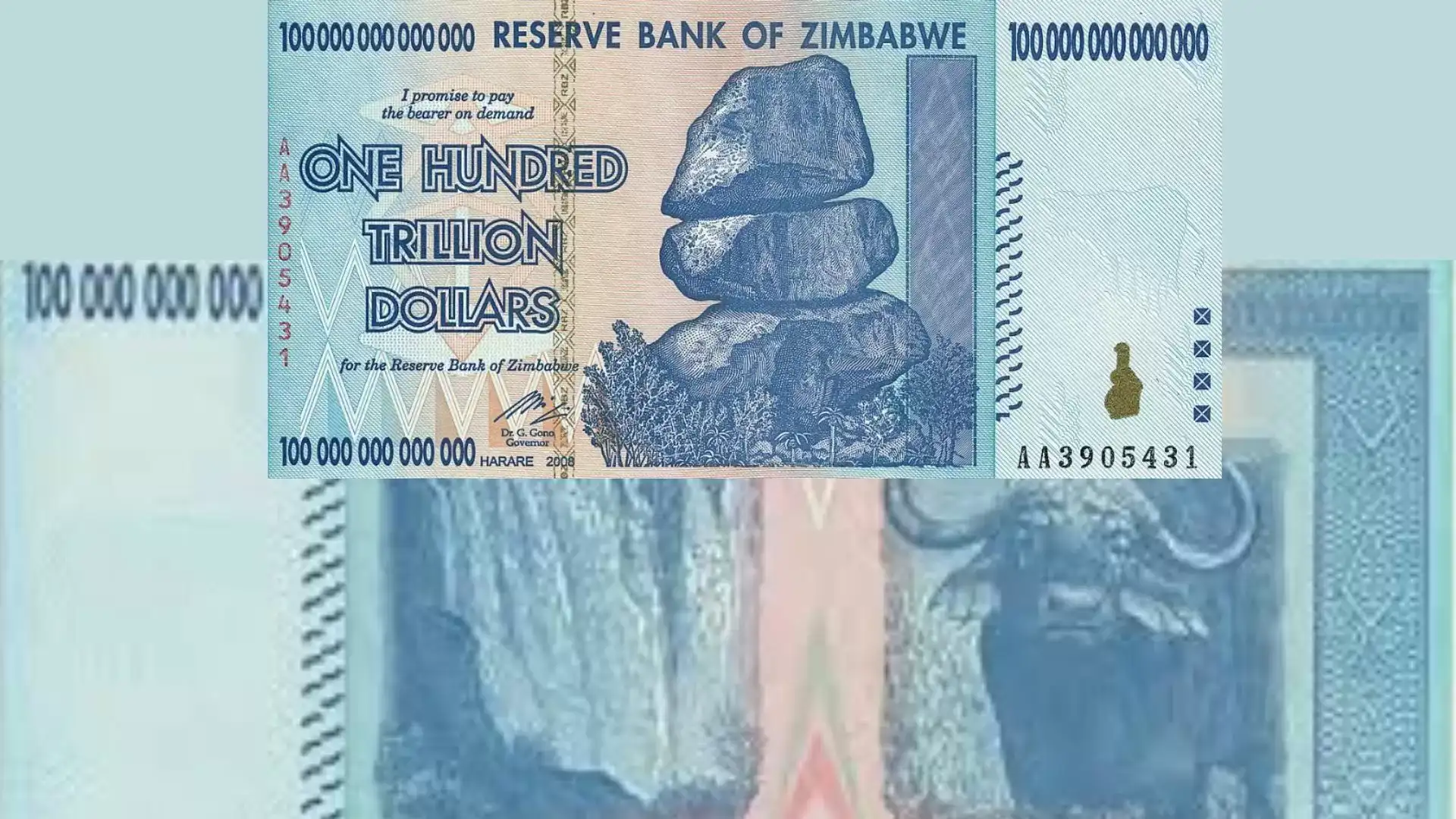 Zimbabwe’s 100 trillion dollar note, issued in 2009 as hyperinflation peaked at 89.7 sextillion percent per month. When the contract breaks, this is what it looks like.
A piece of paper says it is worth something, and society agrees. Not because the paper itself is useful. You cannot eat it, build with it, or use it as a blanket unless things have gone very badly.
Its value comes from the promise around it.
Paper money says:
Someone will accept this later.
That is it. That is the magic spell.
And somehow, the magic spell works at grocery stores, airports, salary accounts, stock markets, restaurants, and those tiny shops that still somehow never have change.
Paper money makes the truth obvious: money is not the material. Money is the agreement.
The same thing becomes even clearer with digital money.
When your salary arrives, what actually arrives?
No truck comes to your house carrying value. No bag of coins is lowered dramatically from the sky. No banker knocks on your door and says, “Congratulations, here is your productivity converted into symbolic civilization units.”
A number changes.
And that number changes your life.
That is terrifying and elegant.
A Paycheck Is a Contract Made Liquid
A paycheck is one of the best examples of money as contract.
At first glance, it seems simple. You worked. Your employer paid you.
But underneath that simple event is a whole tower of agreements.
You agreed to give time, effort, skill, and attention.
Your employer agreed to compensate you.
The bank agreed to recognize the deposit.
The state agreed to recognize the currency.
The tax system took its part, as tax systems tend to do.
Merchants agreed to accept the money.
Society agreed that this number in your account can be exchanged for food, rent, transport, medicine, books, coffee, and occasionally things you absolutely did not need but bought anyway.
A paycheck converts labor into a universal claim.
It takes something deeply personal—your time, energy, body, mind—and turns it into something transferable.
That is both empowering and strange.
Empowering because money gives you options. You do not need your employer to directly provide your food, house, clothes, and entertainment. You receive money and choose.
Strange because your life gets converted into units.
Hours become salary.
Salary becomes rent.
Rent becomes someone else’s income.
Someone else’s income becomes another payment.
The contract keeps moving.
Money is not static. It circulates like a promise trying to find its next believer.
Humans Love Contracts Because the Future Is Annoying
A contract is a way of arguing with the future.
The future is uncertain. People forget. People lie. People die. People change their minds. Markets collapse. Servers go down. Someone deploys on Friday.
So humans create contracts.
A contract says:
Let us agree now so that later we do not have to fight about what we meant.
Money is one of the most successful contracts ever created because it makes future cooperation possible between strangers.
Without money, every exchange would require context.
Who are you?
Why should I trust you?
What do you owe me?
Who will remember this?
What happens if you disappear?
What is the value of your promise?
Money compresses all of that into a recognizable form.
It says:
This settles the matter.
Of course, it does not really settle everything. Humans are far too talented at creating new problems. But money reduces enough uncertainty to allow civilization to move faster.
That is what standards do.
They reduce negotiation.
Imagine if every website had to invent its own way of sending data. The internet would be unusable. Imagine if every company invented its own salary unit. Also unusable, though possibly funny for about ten minutes.
Standards allow scale.
Money is a standard contract for value.
The internet is a standard contract for information.
APIs are standard contracts for interaction.
Paychecks are standard contracts for labor.
Databases are standard contracts for memory.
Blockchains, whether one loves them or avoids them at parties, are attempts to turn contracts into code and consensus.
Again and again, humans seem to solve scale with the same pattern:
Agree on a protocol.
Trust the protocol.
Build on top of it.
Eventually forget that it was invented.
Then act shocked when it breaks.
The Contract We Inherit
Nobody asks a newborn whether they accept the monetary system.
There is no checkbox.
“By entering society, you agree to the terms and conditions of fiat currency, taxation, wage labor, inflation, banking infrastructure, and occasional transaction failures.”
We are born into the contract.
By the time we understand money, we are already inside it. We learn that some paper is more important than other paper. Some numbers matter more than other numbers. Some people have more of these numbers, and this changes how the world treats them.
That is where the paradox becomes uncomfortable.
Money is a shared agreement, but not everyone gets equal power in shaping the agreement.
Some people issue money.
Some regulate it.
Some lend it.
Some inherit it.
Some work their whole lives for it.
Some never have enough of it.
Some are destroyed by the absence of it.
Some are protected by having too much of it.
The contract is collective, but the leverage is unequal.
This is true for many systems. The internet is also built on protocols, but not everyone controls the platforms. APIs are contracts, but the platform owner can change the rules. Employment is a contract, but employer and employee rarely have equal bargaining power.
A contract can create trust.
It can also hide power.
Money does both.
The Paradox of Freedom
Money frees us.
This is easy to forget because most conversations about money are stressful. But money really does create freedom.
It lets strangers cooperate.
It lets people specialize.
It lets you leave bad arrangements.
It lets you move across places and communities.
It lets you convert work into choice.
If you have money, you are not dependent on one person’s generosity. You can enter the market and buy what you need.
But, because humans enjoy ruining elegant things, money also creates new dependence.
Now you depend on wages.
You depend on prices.
You depend on rent.
You depend on banks.
You depend on employers.
You depend on markets.
You depend on systems so large that no single person can fully understand them.
Money frees us from personal dependence and binds us to institutional dependence.
That is the paradox.
A person with money can feel independent. But money itself is only powerful because of a vast collective agreement. Your private freedom depends on public belief.
You hold money individually.
But its power comes from everyone else.
The Internet of Value
The internet moved information.
Money moves value.
But both depend on protocols, trust, and network effects.
A message sent over the internet needs addressing, routing, authentication, interpretation, and response.
A payment needs the same.
Where is it going?
Who authorized it?
Is it valid?
Can it be settled?
Will the receiver accept it?
What happens if it fails?
The more digital money becomes, the more obvious this similarity gets.
Your bank balance is not a pile of cash. It is data with legal meaning.
Your UPI transaction is not just a payment. It is a message that updates multiple ledgers and changes what different people can claim from each other.
Your salary is not just compensation. It is a recurring contract between labor, employer, bank, state, and market.
In India, UPI processed over ₹199 lakh crore (~$2.4 trillion) in FY2024–25 across more than 17,000 crore individual transactions. That is billions of strangers, coordinating value, through a shared protocol, without knowing or trusting each other personally. The API works.
The modern economy is basically a giant distributed system, except the bugs affect rent, food, healthcare, and entire countries.
Which is maybe why engineers should be legally required to study economics, and economists should be forced to debug production systems at least once.
For balance.
Money Is a Shared Fiction, but Not a Fake One
Calling money a fiction sounds like an insult.
It is not.
Some of the most powerful things humans have ever created are shared fictions: laws, nations, borders, companies, universities, religions, brands, human rights, citizenship, marriage, job titles, GitHub stars.
Okay, maybe GitHub stars are less powerful, but emotionally, some people behave otherwise.
A shared fiction is not fake simply because it is invented.
It becomes real when enough people act as if it is real.
Money is imaginary in the same way a border is imaginary. You cannot see it from space, but try crossing it without permission and you will discover its reality quite quickly.
Money is a fiction with enforcement.
A belief with infrastructure.
A story with accounting.
A contract with consequences.
That is why it works.
And that is why it can fail.
When people stop believing in a currency, it collapses. When institutions abuse trust, money weakens. When inflation eats purchasing power, the contract feels broken. When banks fail, people suddenly remember that their money was never just “there.” It was part of a system.
Zimbabwe is the textbook case: hyperinflation peaked at 89.7 sextillion percent per month in November 2008. The government eventually issued a 100 trillion dollar note — not as a joke, but as a practical denomination. The contract had not just broken; it had become a punchline. Venezuela’s bolivar lost over 99.99% of its value between 2016 and 2019. In both cases, the money did not disappear. The belief did.
Trust is invisible when it works.
It becomes visible when it breaks.
The Contract That Owns Us Back
Consider this: the US Federal Reserve estimates that only about 8% of all money in existence is physical cash. The remaining 92% is digital — numbers in databases, entries in ledgers, balances in accounts. The thing we call money is mostly just records of agreements, all the way down.
The strangest thing about money is that humans invented it, and then arranged civilization around it so thoroughly that it now feels like nature.
But money is not nature.
It is not gravity.
It is not sunlight.
It is not hunger.
It is not death.
It is an agreement.
A very old, very useful, very dangerous agreement.
And like all agreements, it can be redesigned, corrupted, repaired, expanded, restricted, weaponized, democratized, or broken.
Maybe this is also why money is worth studying beyond economics.
Because for all its flaws, money scaled.
It scaled from villages to kingdoms, from kingdoms to empires, from empires to nation-states, and eventually into databases, payment networks, salary systems, markets, and apps on our phones. It became one of humanity’s most successful coordination systems.
Not perfect. Not fair. Not bug-free. But scalable.
And if money is a contract that scaled, maybe we can extract some principles from it.
1. Standard interfaces
Money does not require two humans to understand each other completely. They do not need the same language, religion, politics, family history, or taste in music. They only need to agree on the payment layer. That is what good APIs do too. They reduce the surface area of agreement. They say: you do not need to know my internals; you only need to respect this contract.
2. Portability
Money made obligations portable. Instead of “I owe you,” it created “whoever holds this token has a claim.” That is a huge leap. Modern systems scale when context can travel without dragging every original human along with it. Good documentation, tickets, contracts, logs, tests, dashboards, receipts, credentials, and APIs all do the same thing. They make trust portable.
3. Externalized memory
Small groups can run on memory. Large systems cannot. A village can remember who owes what. A tiny team can remember why something was built. But at scale, memory needs to move into ledgers, documents, interfaces, audits, and source-of-truth systems. Otherwise every organization eventually becomes “ask Priya, she knows,” and Priya, tragically, would also like to take a vacation.
4. Settlement
Money works because it helps close the loop. After payment, the buyer and seller can move on. Many modern systems fail not because people cannot start things, but because they cannot finish them. Meetings end without decisions. Projects end without owners. APIs fail without clear errors. Teams agree verbally and then remember differently. Scalable systems need to make it clear what happened, who owns it, and when the obligation is done.
5. Visible failure
When money breaks, the hidden contract becomes visible: inflation, bank runs, fraud, failed payments, defaults. Large systems need the same visibility. Software needs logs. Organizations need dashboards. Products need feedback loops. Processes need retrospectives. If failure is silent, trust quietly rots.
6. Trust without intimacy
This may be money’s most underrated achievement. It lets strangers cooperate without becoming friends first. The best systems do something similar. They are legible to newcomers, users, partners, future maintainers, and even your future self at 2 a.m. trying to understand what past-you was thinking.
So perhaps the lesson is this:
If you want a system to scale, do not ask everyone to trust everyone.
Create a contract they can all trust enough.
Maybe that is the point worth remembering.
Money is not just an economic tool. It is a human protocol. It is a contract that lets strangers coordinate across time and space. It turns memory into ledgers, trust into tokens, work into paychecks, and belief into purchasing power.
But the paradox remains.
Money feels solid, yet it is built on belief.
Money feels private, yet it depends on everyone.
Money gives freedom, yet creates dependence.
Money measures value, yet cannot tell us what is truly valuable.
Money is invented, yet it governs real lives.
We did not just create money to exchange goods.
We created money to make promises portable.
And then, somewhere along the way, we forgot it was a promise.
Live long and prosper.
~ Rajul